LSU added guard RJ Luis Jr. to its roster on Tuesday, prompting the Southeastern Conference to express its disappointment with the university.
The Tigers’ decision to roster Luis, after initially refraining while he sought another year of NCAA eligibility in court, inflamed tensions between the SEC and its member institution, all while the league continues to bring a federal lawsuit against LSU.
Luis, a former star at St. John’s, has signed two professional contracts since his last college appearance. He was on a two-way deal with the Utah Jazz and an Exhibit 10 contract with the Boston Celtics’ G League affiliate in Maine, but he never appeared in an NBA game.
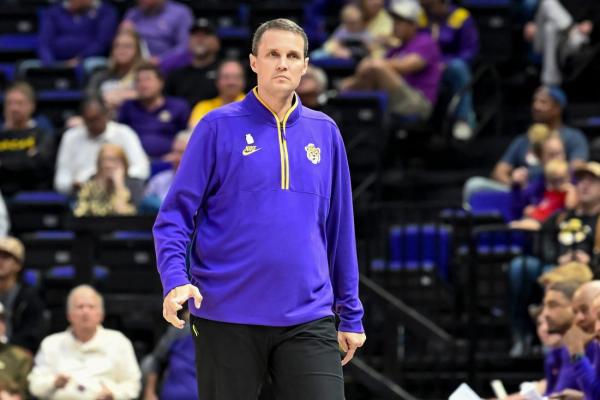
Luis committed to LSU in May, but coach Will Wade indicated in the preseason that the Tigers would not roster him following a new SEC rule that prohibited the return of any athlete that had signed a professional contract or entered a professional draft.
On Friday, a Louisiana judge upheld a preliminary injunction in the case, not only allowing Luis to play another season, but also preventing the SEC from declaring him ineligible or punishing LSU for letting him play.
“RJ secured his eligibility through a court order before the new SEC policy interpretation was announced,” LSU president Wade Rousse said in a statement. “LSU supports that updated policy going forward, and we remain a proud and committed member of the SEC.”
The SEC’s legal counsel said Monday that the conference would abide by the judge’s order and not impose penalties on LSU over the matter. Nevertheless, the SEC responded Tuesday with a rebuke of the Tigers program.
“LSU’s decision today to rely on its own interpretation of the Court’s order to justify its actions is inconsistent with the expectations and responsibilities of membership in the Southeastern Conference,” the SEC said in a statement. “This is a deeply concerning and disappointing development. The Conference will continue to uphold and defend the standards and policies established by its member universities.”
All this comes one day before the SEC and LSU meet in federal court in Birmingham, Ala., for a hearing in the conference’s ongoing lawsuit against the university.
The suit, initially filed when LSU’s football program was attempting to add multiple players who were cut from NFL rosters during training camp, centers on what the SEC calls its First Amendment right of expressive association. LSU filed a motion to dismiss in September. The SEC filed its opposition in October.
The conference said controversy remains over what it describes as LSU’s lack of institutional control over its athletic programs.

